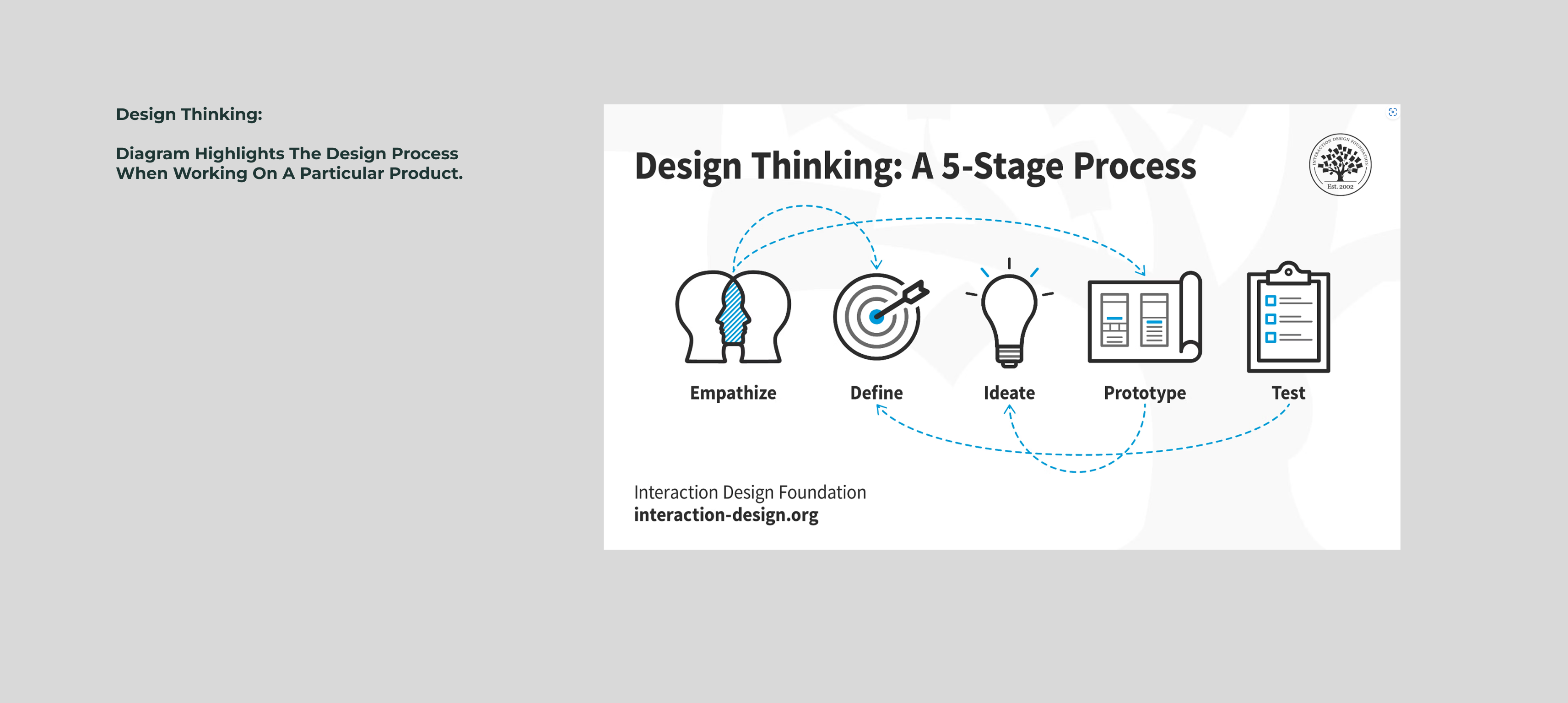
c. Competitor Analysis
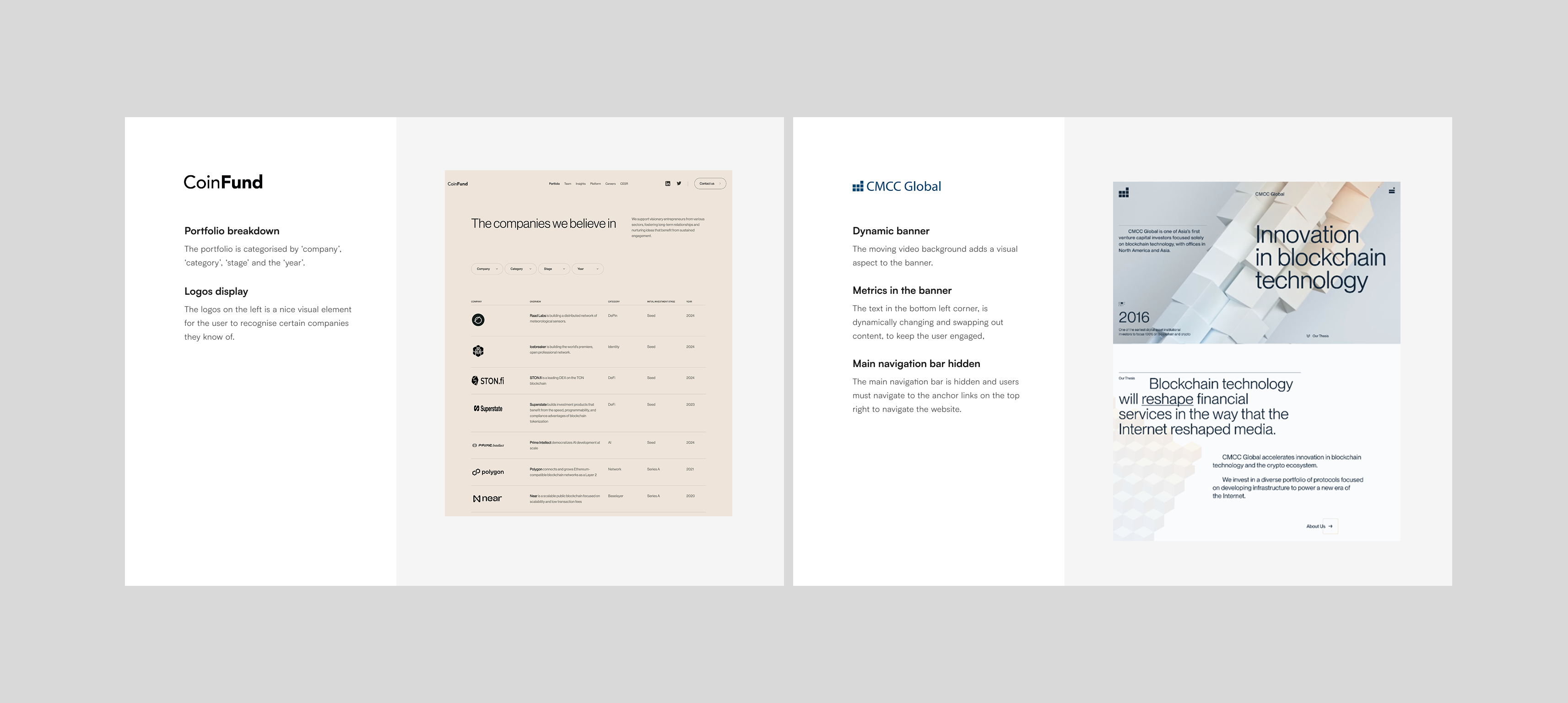
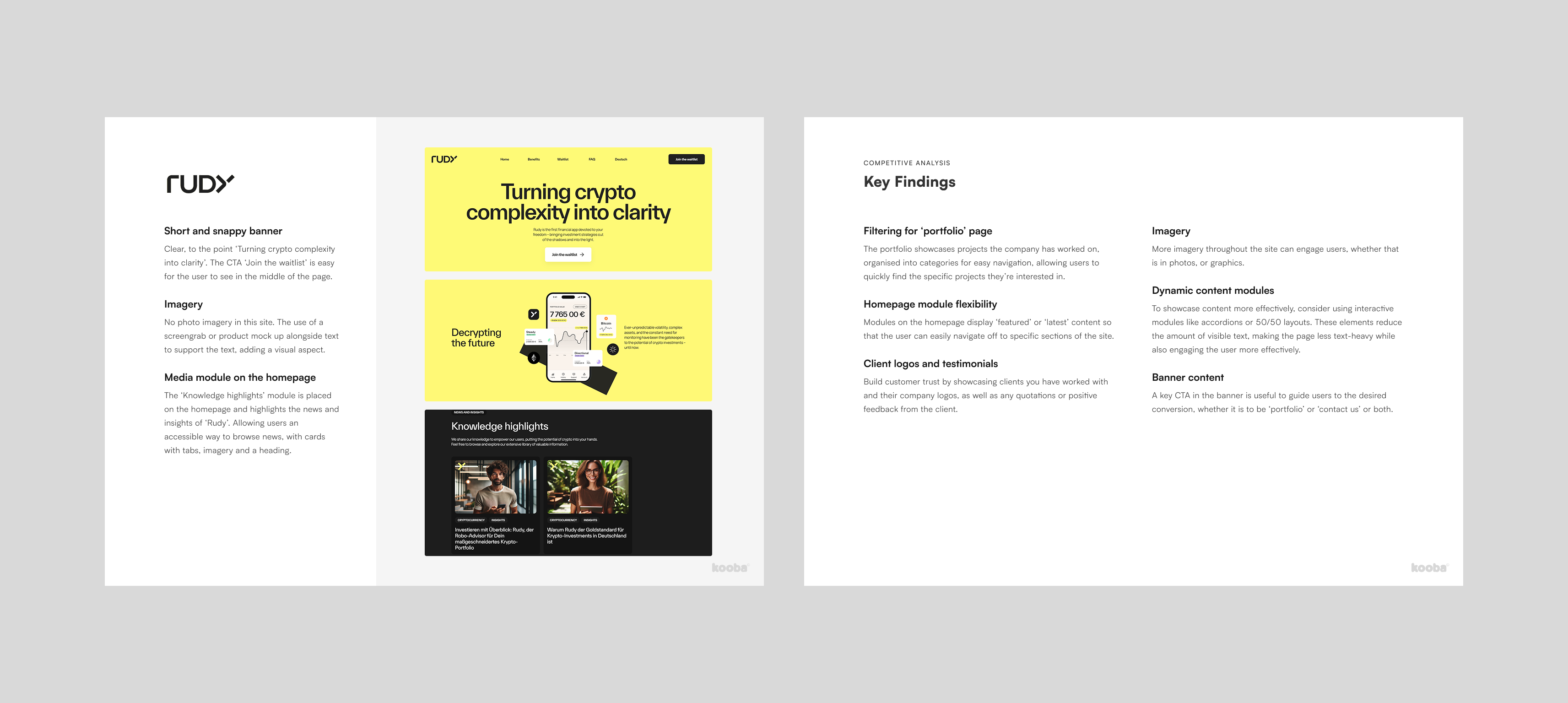
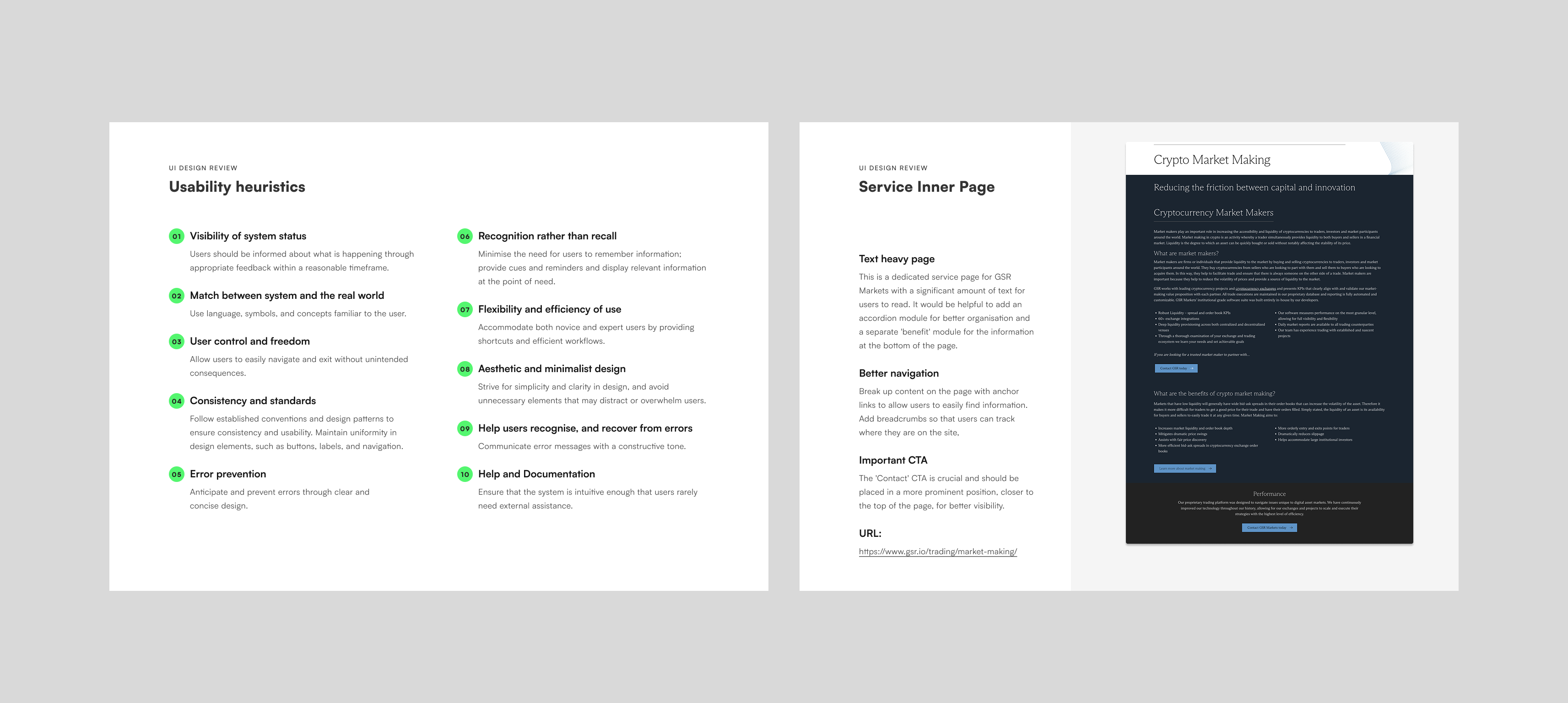
Findings to consider for the new design based on competitors in the same industry:
- Imagery throughout the site can engage users.
- Homepage key pivotal area, take advantage of the opportunity to guide users to i.e. the portfolio listing page.
- Filtering for 'portfolio' listing page, to find portfolio projects more efficiently
- Dynamic content modules for a more modern touch
- Feature client logos and testimonials to increase credibility
2. User Questionnaire
Gather user demographic, user goals and needs, current pain points, design and usability issues, competitor insights.
Questions shared with current users of the website on forms (Google forms)
1. How often do you use our platform for cryptocurrency trading?
2. How would you rate the overall user experience of the current website? (1 = Poor, 5 = Excellent)
3. What are the main challenges or pain points you face when using the website?
4. What features do you find most useful on our platform?
5. How easy is it to navigate the website and find the information you need? (1 = Very Difficult, 5 = Very Easy)
6. How does our platform compare to competitors in terms of usability and design?
7. How important is a visually appealing and modern design for your trading experience? (1 = Not Important, 5 = Very Important)
8. Have you encountered any technical issues or bugs while using our platform?
"It has an outdated design, in comparison to other sites"
- user, individual
"Other platforms have better mobile experiences, which is a downside here."
- user, individual
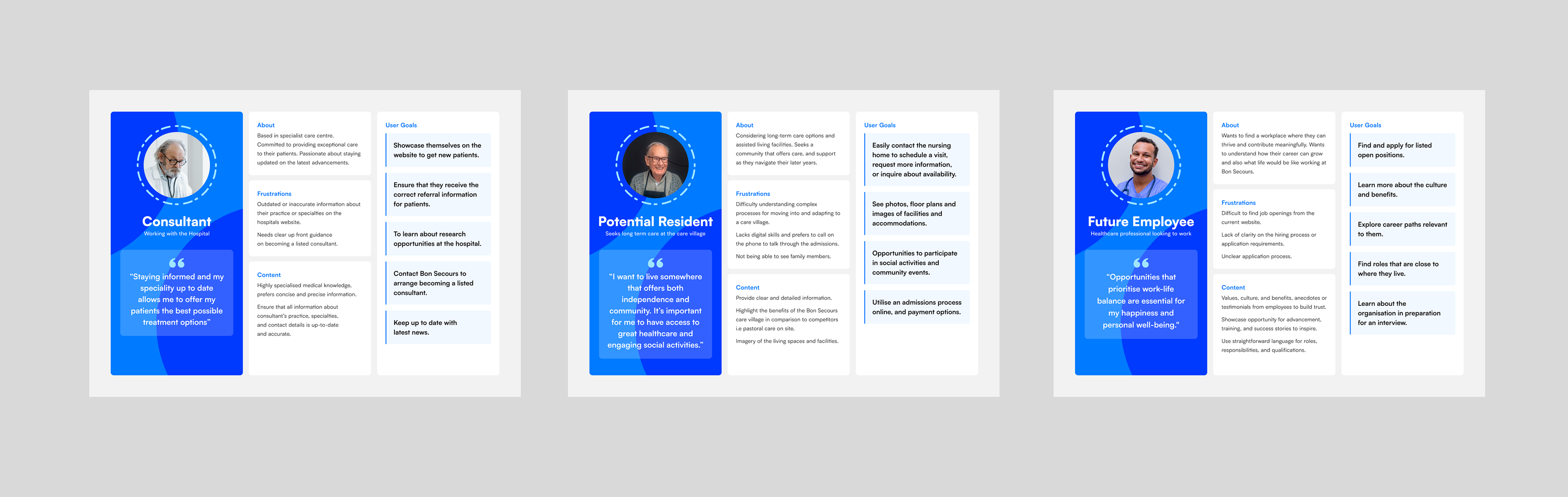
Side note from another client project: user persona development to then test out user scenarios for later on user journey mapping. The user personas outline the description of the type of user group i.e. future employee, their frustrations i.e. difficult to find job openings on the current website, content they'd be interested in on the website i.e. testimonials from employees working at the organisation and their user goals i.e. find roles that are close to where they live.
3. Wireframing
Taking the research findings and insights to ideate and create wireframes. The wireframes had three versions, with the final version being approved by the client in Wireframe presentations with client and team.
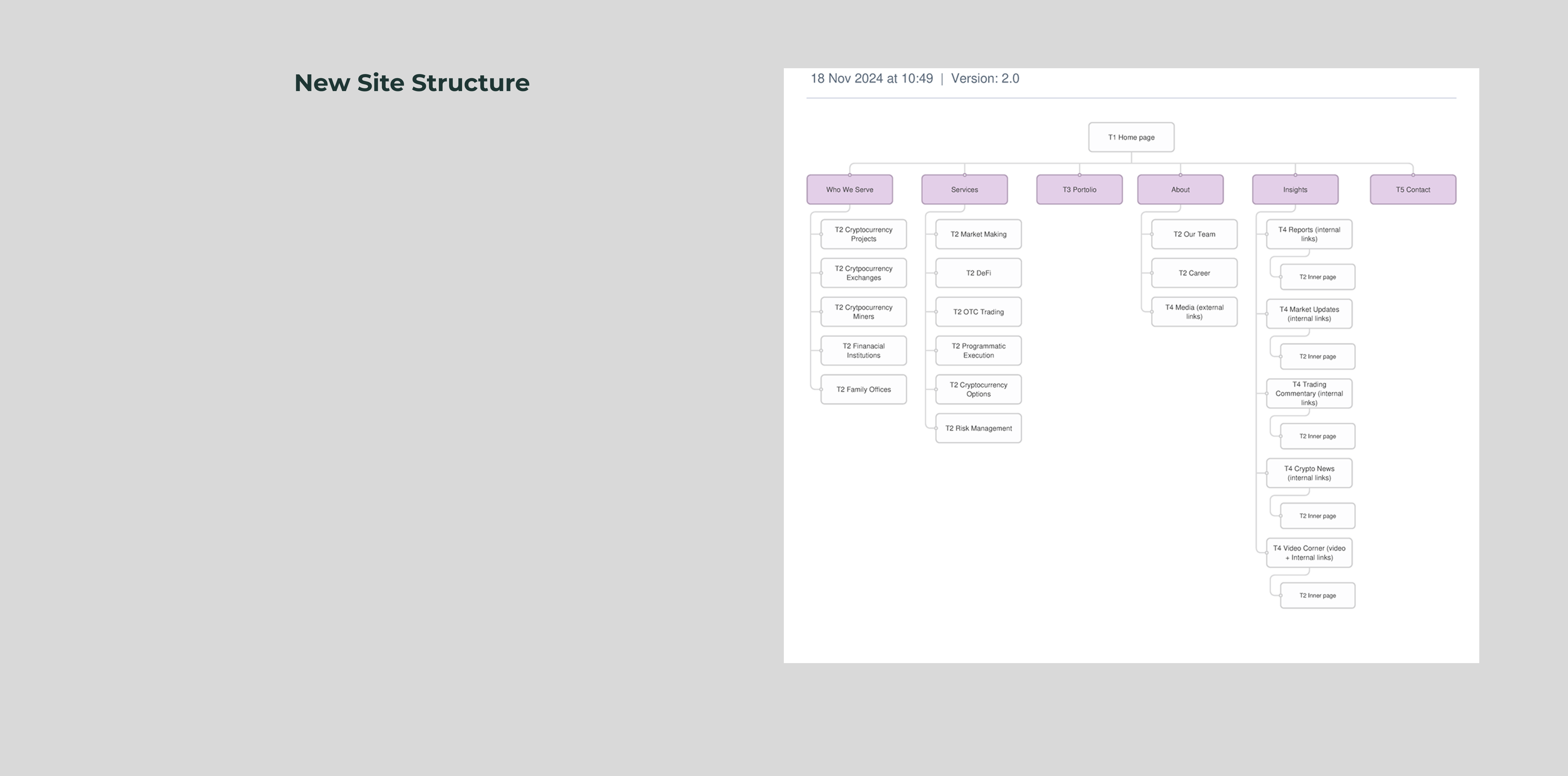
Sitemap:
We maintained the existing site navigation due to its simplicity and effectiveness, focusing instead on enhancing the details and structure of the individual pages within the wireframes.
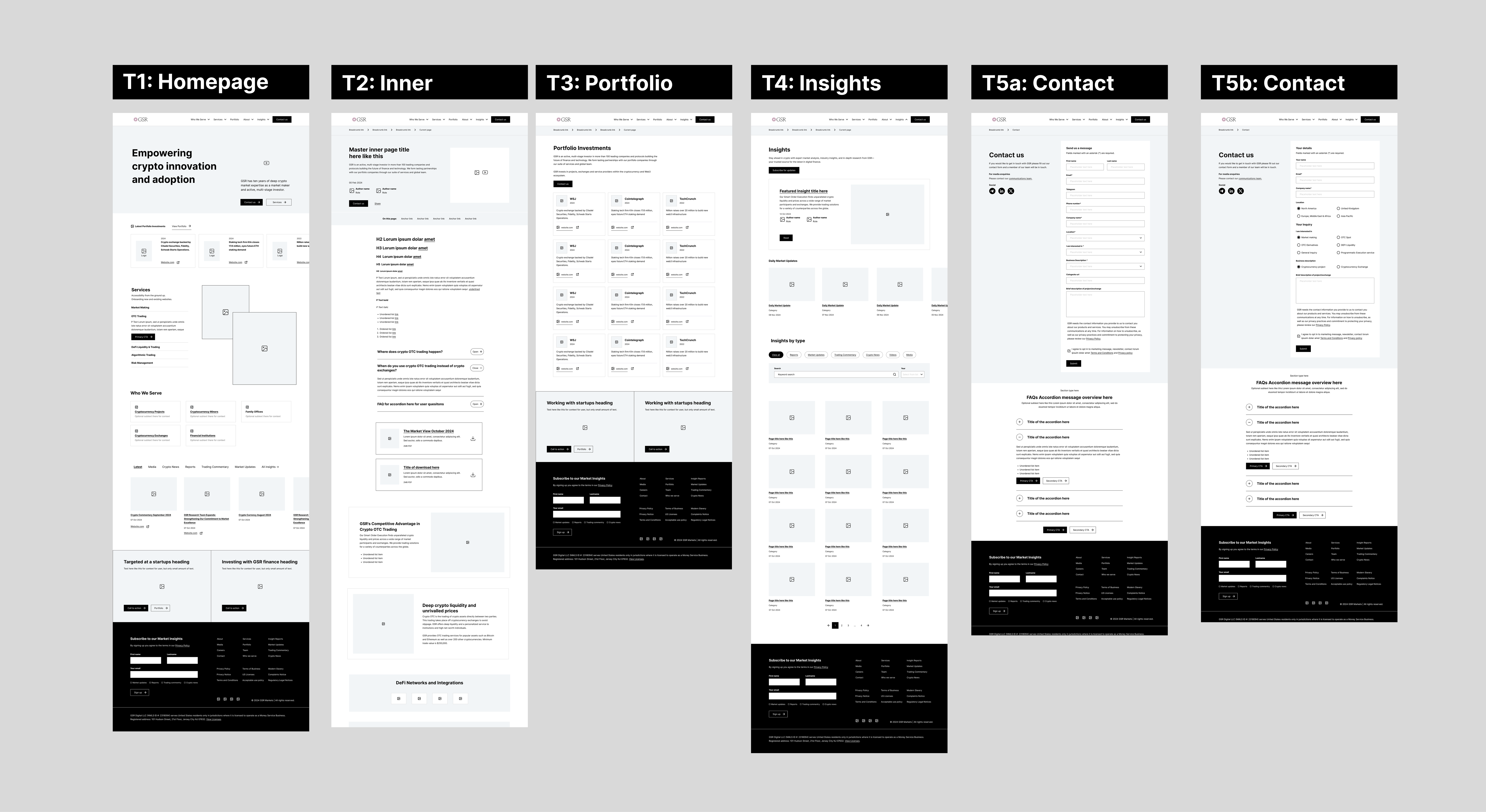
Wireframe templates:
Wireframes for the T1 Homepage, T2 Standard Inner page - for article and services detail pages, T3 Portfolio (listing page), T4 Insights (newsroom Landing page for reports, crypto news, media, trading commentary), T5 Contact form (different versions) - (a) dropdown menu and (b) bullet points.
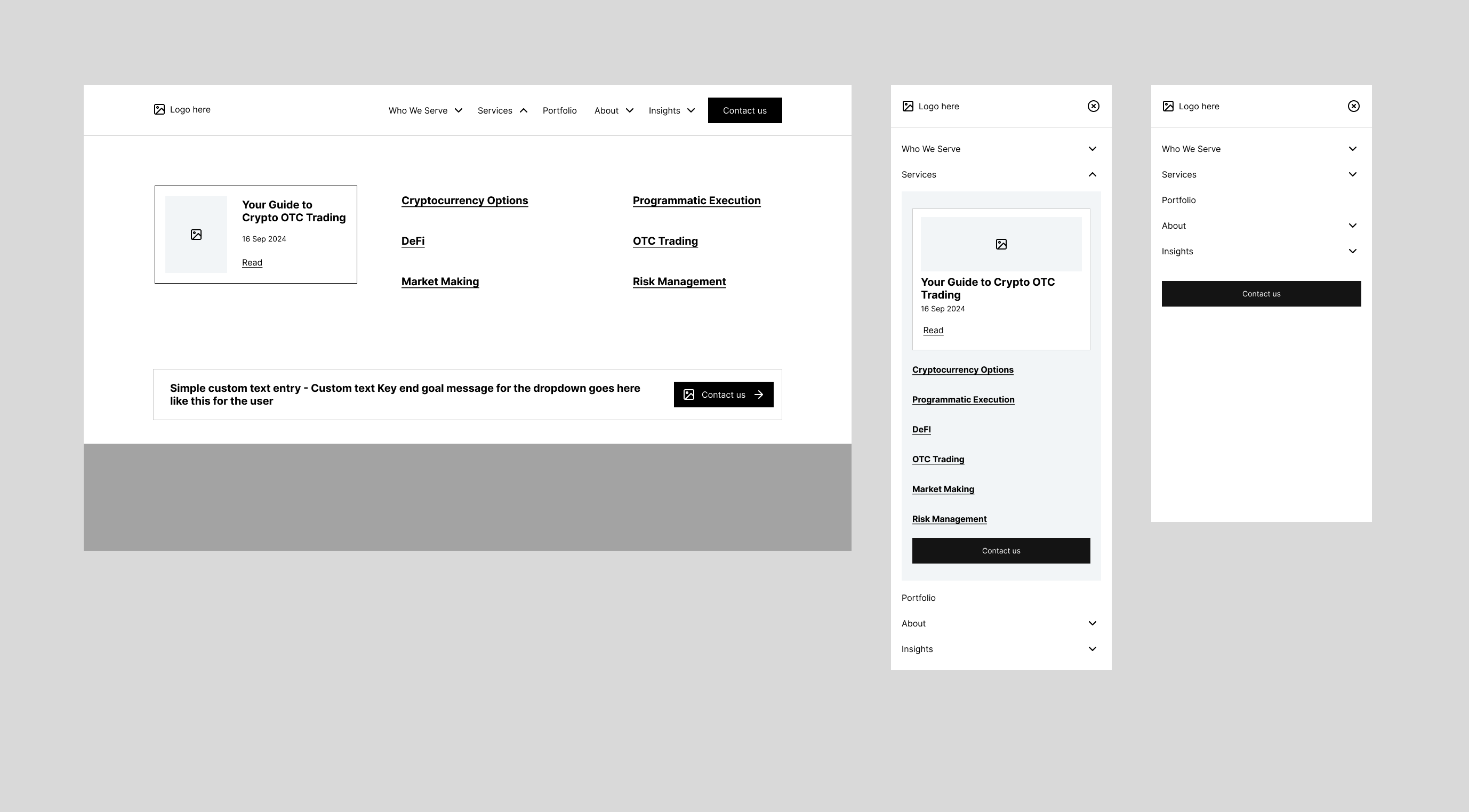
Drop down menu module wireframe:
We aimed to enhance the dropdown menus by incorporating visual elements. The updated design now includes a 'featured' article or guide, and an image. Along with a clear call-to-action button, 'Call Us,' to drive more lead generation conversions.
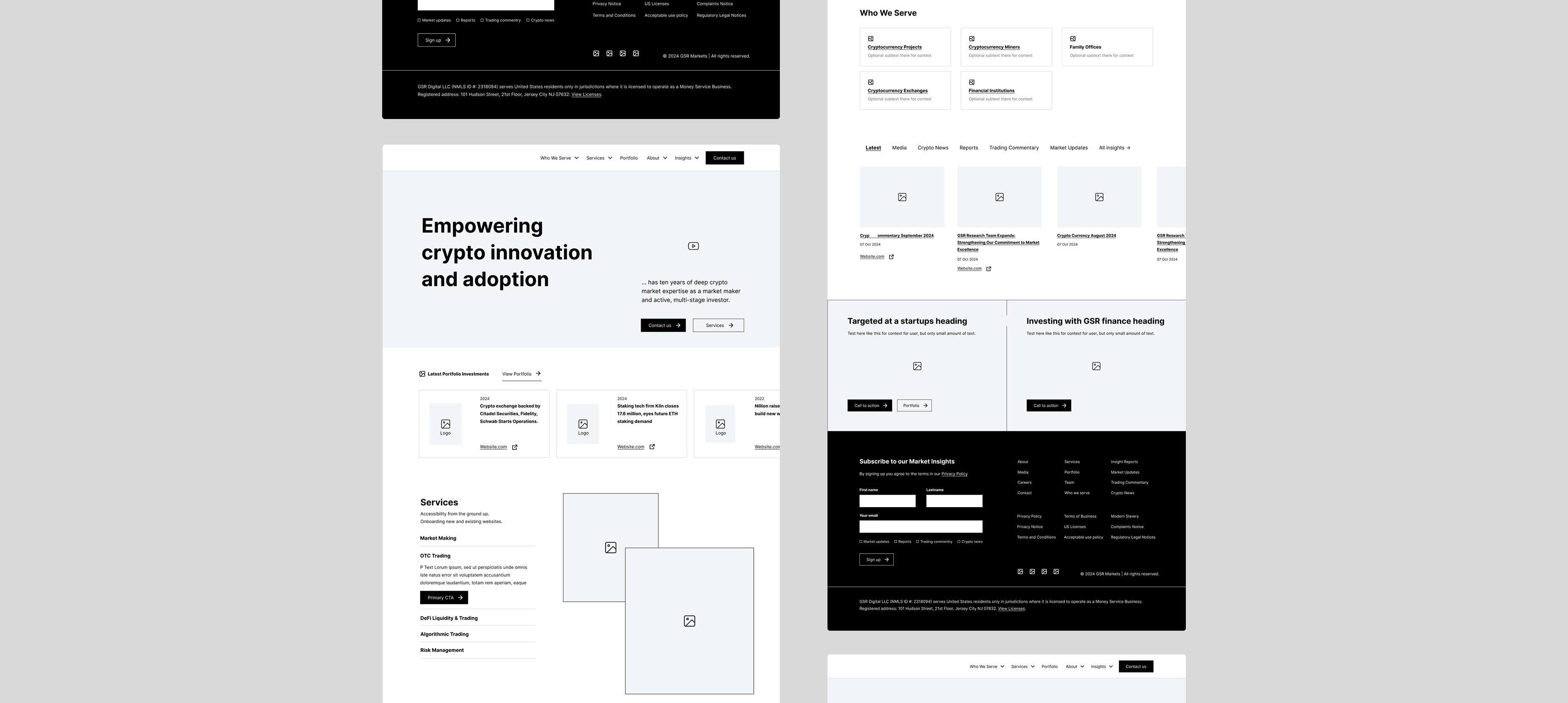
The homepage restructure:
Portfolio module: Seeing as the portfolio is a key aspect to this industry, we placed a new portfolio module just underneath the banner to direct users off to the Portfolio listing page. The cards feature the date, title of the project, relevant logo of the company and an external link.
Services module: Dynamically changing 50/50 module. This aligns with the clients request to have a more modern, moving website. Each of the images change after the user clicks on the type of service.
Industries module (Who We Serve):
This module has streamlined the industries section, reducing its size to minimise scrolling on the homepage. Removing full accompanying images helps save space while maintaining clarity and accessibility.
Insights module: The current homepage displays only two types of reports. Our new module introduces a filtering option for all 'Insights' categories—such as latest updates, news, and reports—enhancing visibility and potentially increasing views and engagement.
Call-to-action module: The module at the bottom of the page is designed to cater to two target audiences: individuals interested in cryptocurrency investments and startups. This personalised approach helps guide users toward contacting the client more effectively. This module, as well as the footer are implemented statically across all of the templates for the new wireframes.
Footer: The redesigned footer integrates the newsletter sign-up form with navigation options, optimising space and enhancing usability across the pages.
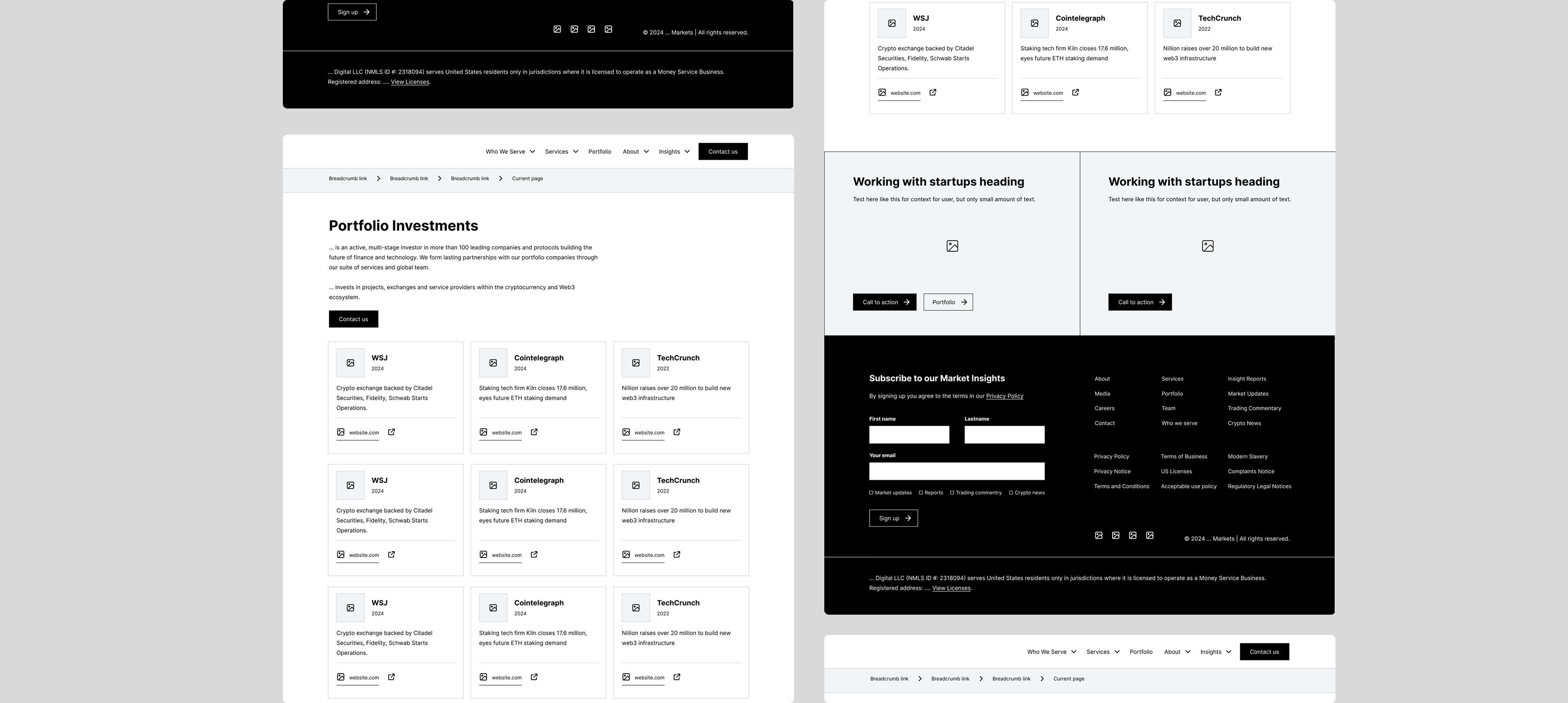
The portfolio investments page:
This client does not have too many projects, therefore there is no need to implement a filtering module.
The new cards for each portfolio project feature a logo image, title, date of the project, name of the website external domain URL, and an external link icon. This is to ensure the user knows that the portfolio project is displayed on an external site page, and not the current sites inner page.
Insights page:
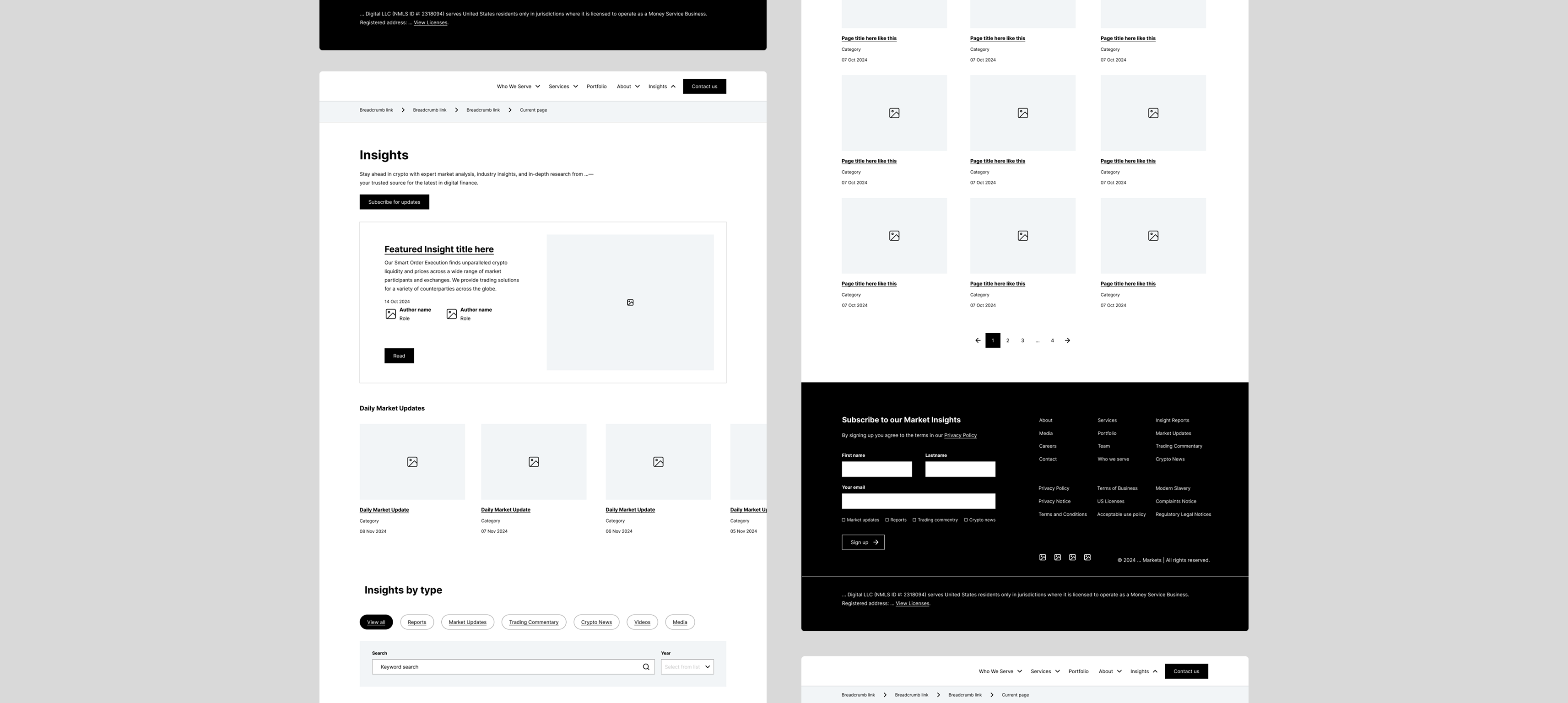
A new landing page has been created to showcase all insights. At the top, a 'featured' article is prominently displayed, followed by a dedicated section for 'daily market updates' to highlight their frequent updates. Towards the bottom, a tabbed interface allows users to filter insights by type, year, and a search bar for streamlined navigation. The current site has no clear distinction between the different types of insights with each of the cards looking the same for marketing updates, trading commentary, video corner, crypto news etc.
Functional Spec of the total modules and templates:
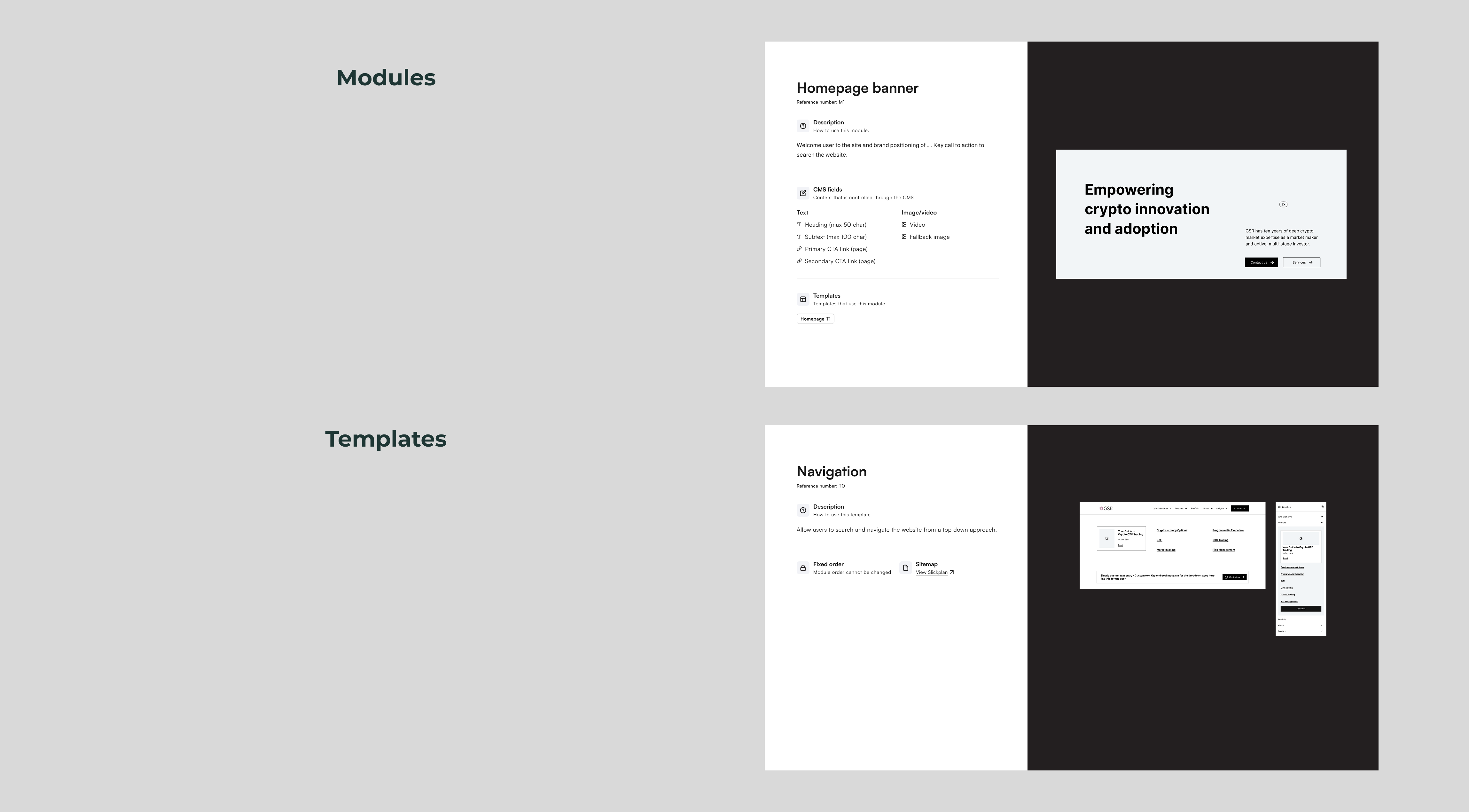
This document outlines in detail the collect of website modules and templates to be completed. This document is handed over to the User Interface (UI) team and the development team to begin process.
4. UX Post Launch Report, focusing on the user and their experience.
Measuring the impact of the redesign:
The post launch report outlines the progress of the new design, after the design have gone through the UI phase, the development stage and then the launch of the website. This gives us insight into the success or the effect of the new build.
SLA work ensures the continuous improvement and maintenance of the new build, to iterate designs and technical fixes.
Problem space: the services for all locations are grouped together and displayed on the one page and the list is lengthy.
Problem solution: a second location (Belfast) option filter for users to easily distinguish and find the services they are looking for efficiently.
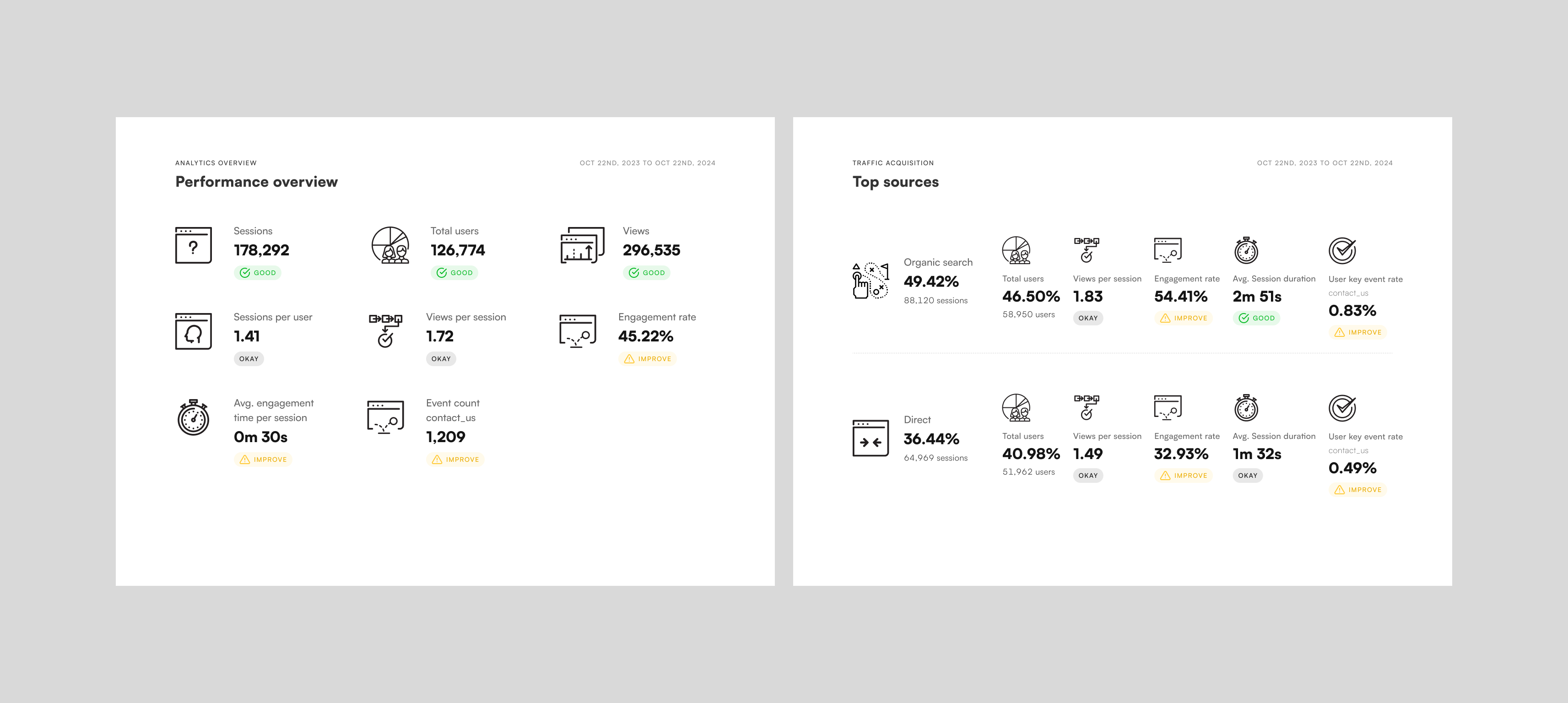
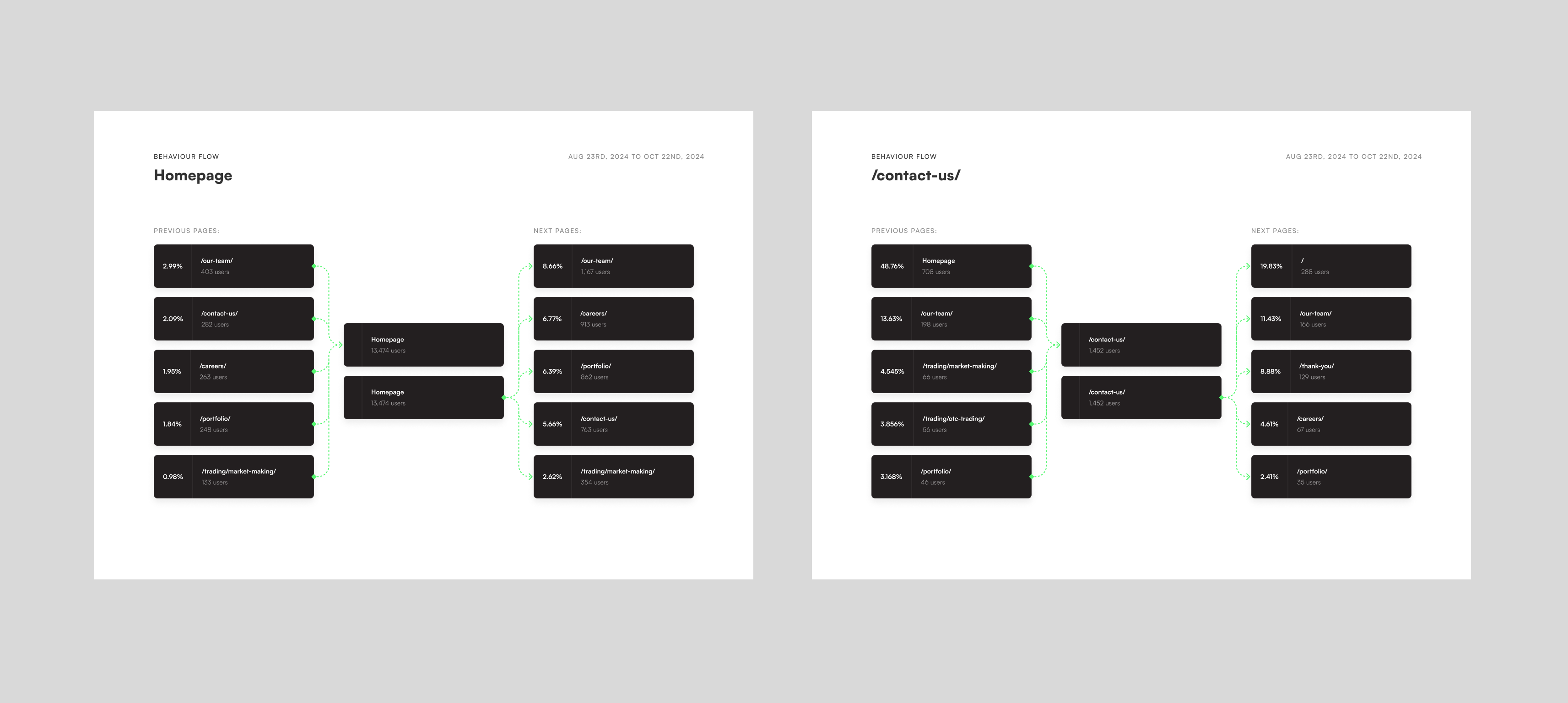
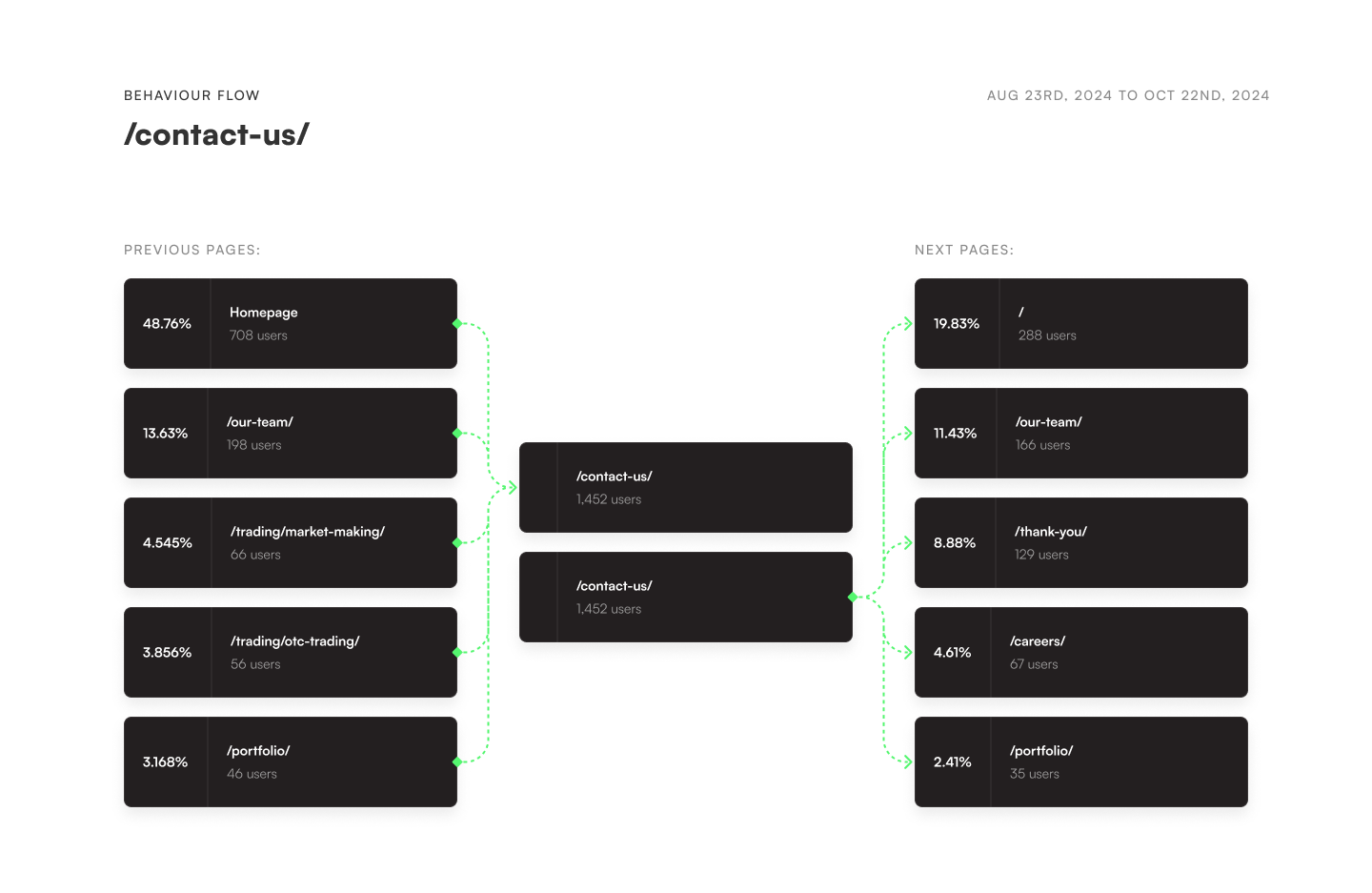
Testing: effectiveness of the redesign after the new design implementation through any changes in user analytics, behavioural flows between the top next pages users click through, scroll depth and click analysis.
.png)
- The engagement rate for the Services page has seen a significant jump from 20% to 90% following the recent design updates. This is a 350% percentage rise. This indicates that users are interacting with the newly designed page much more effectively.
- The specifically “Belfast Services” services of ‘/...-solutions’ and ‘/services/real-estate’ have moved further up in the ranking in the top next pages overall in the behavioural flow in comparison to the previous year. This may be due to the “Belfast services” option being at the top of the page and therefore more easily accessible to users.
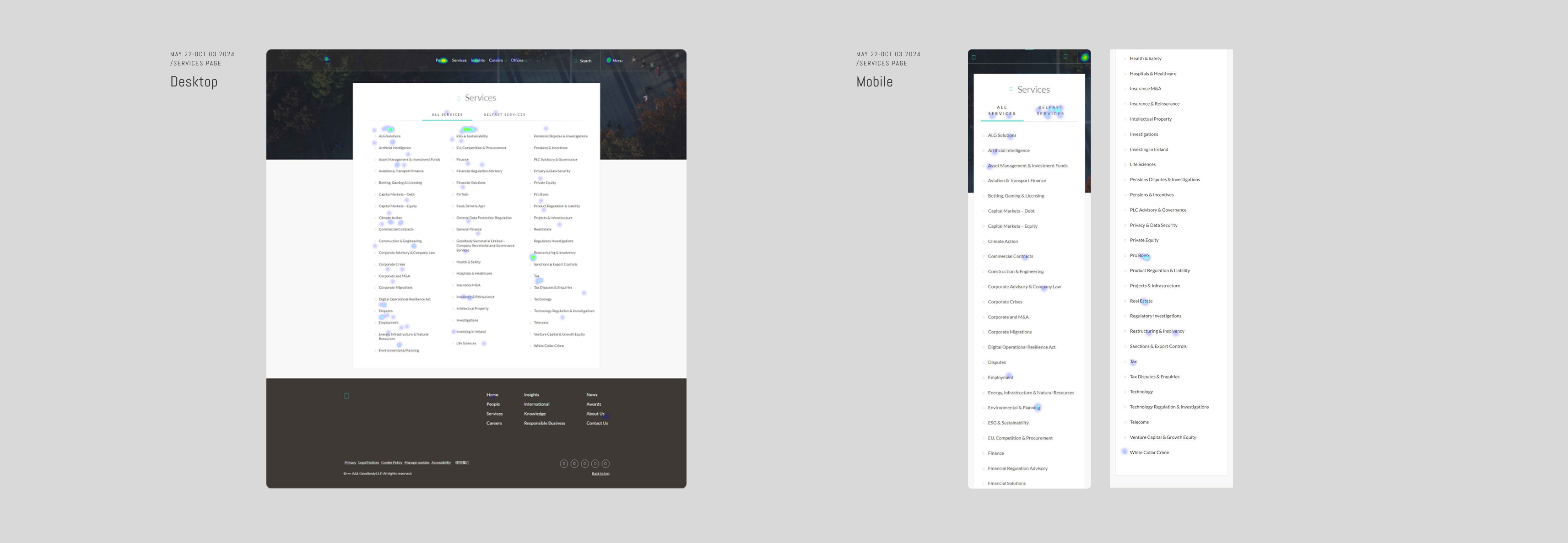
- Click analysis: It’s clear from the scroll data on both mobile and desktop that users are able to view both the ‘All Services’ and ‘Belfast Services’ options located at the top of the page, with 100% of users reaching this section. This design change has been effective, allowing users to easily distinguish between the types of services without needing to scroll to the bottom, as they had to with the previous design.